
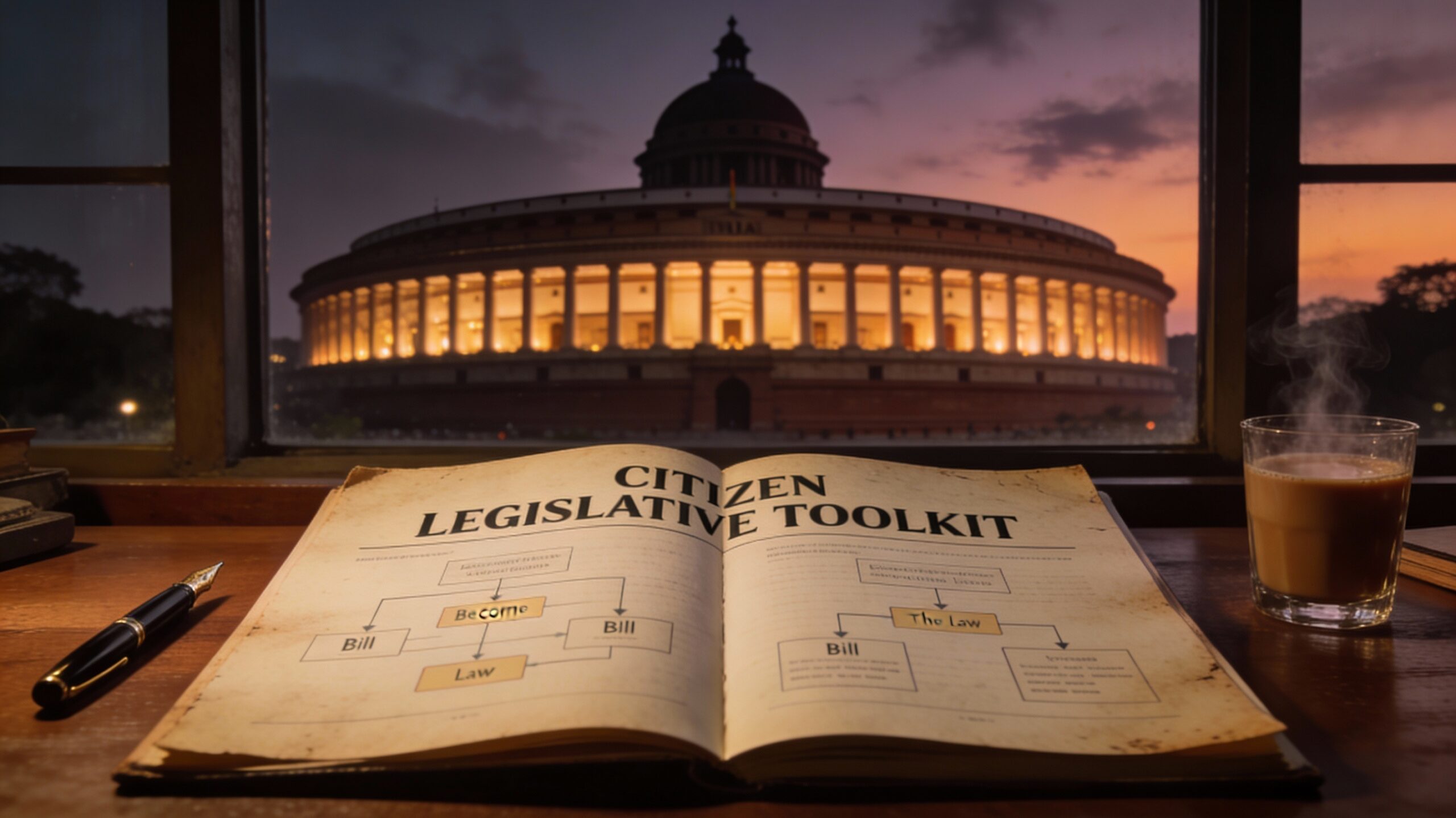
**Your Vote Was Just the Deposit. Now It’s Time to Pay the Bill.** **Blog Caption:** The Secret Manual to Lawmaking They Forgot to Give You **Stop acting like a guest in your own house.** Most people think democracy is a Netflix subscription—you pay once every five years and then complain about the programming. That is wrong. That is lazy. And frankly, after 50 years of watching the gears of this nation turn, it’s dangerous. Here is the truth the politicians won't scream from the podium: **The doors to the Parliament kitchen are unlocked.** You don't have to eat whatever law they serve you. You have the right—no, the *duty*—to walk in, critique the recipe, and send it back if it smells rotten. I’m going to show you exactly how to hijack the legislative process (legally) and force the system to listen. ### Why You Need to Wake Up Right Now We are seeing a trend that should scare you. Laws are being passed in minutes. Ordinances are replacing debate. The "voice vote" is silencing the actual voices. * **Pain Point:** Remember the Farm Laws? Passed in a rush, repealed in a riot. That chaos happens when the process is bypassed. * **The Stat:** In recent sessions, nearly **75% of bills** were passed without being sent to a committee for scrutiny. That means no expert eyes, no citizen input, and no brakes. * **The Reality:** You feel powerless because you only show up for the "Third Reading" (the final vote). You need to show up for the *drafting*. **Here is your toolkit for becoming a Legislative Vigilante:** * **The "Secret" Weapon:** The Pre-Legislative Consultation Policy (PLCP) of 2014. * **The Backdoor Entry:** Departmental Standing Committees. * **The Nuclear Option:** Judicial Review and RTI. * **The Blueprint:** How to draft your own "Private Member's Bill." *** ### Phase 1: The "Incubation" Stage (Before the Bill is Born) This is where 90% of the game is won or lost. Most people wait until a bill is on the news to get angry. **Too late.** **1. The Pre-Legislative Consultation Policy (PLCP)** In 2014, the government decided that every new bill *must* be placed in the public domain for 30 days. * **Your Right:** You have the right to see the draft text, the financial cost, and the "why" behind the law. * **Your Duty:** Don't just tweet. Go to the Ministry website. They are legally obligated to provide an email or portal for feedback. * **The Hack:** If they skip this (and they often do), file an RTI asking *why* the PLCP was bypassed. It creates a paper trail that lawyers can use later in court to prove "arbitrariness." **2. The "Private Member’s Bill" Strategy** Think only Ministers can introduce laws? Wrong. Any MP can introduce a "Private Member's Bill." * **Your Role:** You can’t walk into Parliament and drop a bill on the Speaker's desk. BUT, you can draft one. * **Action:** Draft a law. Make it professional. Find an MP who cares about that niche (environment, tech, animal rights). Hand it to them on a platter. They are desperate for good ideas to make them look proactive. You become the ghostwriter of democracy. *** ### Phase 2: The "Battlefield" (When the Bill is in Parliament) Once the bill is introduced, the clock starts ticking. This is where the **Standing Committees** come in. This is the only place where party politics often takes a backseat to actual logic. **1. Demand the Committee Referral** When a bill is introduced, the government often tries to rush it. * **Your Move:** Your MP works for you. Bombard their office with one specific demand: *"Refer Bill X to the Standing Committee."* If enough constituents ask, it becomes politically expensive for them to say no. **2. The Written Submission** Committees invite "expert testimony" and "public feedback." * **The Myth:** You need a PhD to submit feedback. * **The Truth:** You need a brain and a postal address. * **How to do it:** Write a concise, evidence-based critique of the bill. Send it to the Committee Chairman. If your points are sharp, they might invite you to testify in person. I’ve seen college students change the minds of seasoned Senators just by showing up with data. *** ### Phase 3: The "Emergency" Loophole (Ordinances) Sometimes, the government skips Parliament entirely and issues an **Ordinance** (Article 123). It’s supposed to be for emergencies only. Now? It’s a habit. * **The Danger:** It becomes law instantly. * **Your Duty:** An ordinance must be ratified by Parliament within 6 weeks of reassembly. This is your window. * **Action:** Treat an ordinance like a fire alarm. The pressure on MPs to *reject* the ratification must be immediate. Organizing local town halls during the parliamentary recess is the most effective way to spook a legislator before they return to Delhi. *** ### Phase 4: The "Aftermath" (When Bad Laws Pass) So, they ignored you. They passed the bad law. Is it over? **No.** **1. Social Audit & RTI** A law is only as good as its implementation. * **The Tactic:** Use the Right to Information Act (RTI). Ask for the "Rules of Procedure" (the user manual for the law). Ask for compliance data. If the law isn't working, generate the data that proves it. Data is the ammunition for the next amendment. **2. The Judicial Strike** In India, Parliament is supreme, but the Constitution is *Sovereign*. * **The Concept:** If a law violates the "Basic Structure" of the Constitution or your Fundamental Rights (like Article 14 - Equality), it is void. * **Your Role:** You don't have to be the victim to sue. Public Interest Litigation (PIL) allows *anyone* to challenge a law on behalf of the public. *** ### The 50-Year Verdict: Do's and Don'ts * **DO** read the "Statement of Objects and Reasons" at the end of every bill. It tells you *why* they claim they are doing this. * **DO NOT** rely on WhatsApp University for legal analysis. Read the primary text. It’s boring, but power is usually hidden in the boring parts. * **DO** form coalitions. One letter is trash; 10,000 letters is a constituency. * **DO NOT** think local laws don't matter. State Assemblies pass more laws that affect your daily life (police, land, water) than Parliament does. The process is the same. *** ### What do you think? Are you going to let them cook without checking the ingredients, or are you ready to put on the apron? The system is systematic, organized, and structural—but it only works if **you** provide the energy. **Let’s start a fire in the comments:** Which current bill or law do you think needs immediate citizen intervention? Drop it below. **Tag a friend who thinks "politics is boring" — they are the ones who need this the most.** **Follow for more legislative hacks and deep dives into your rights!**

The Secret Manual to Lawmaking They Forgot to Give You

Your Vote Was Just the Deposit. Now It’s Time to Pay the Bill.

Stop acting like a guest in your own house.

Most people think democracy is a Netflix subscription you pay once every five years and then complain about the programming. That is wrong. That is lazy. And frankly, after years of watching the gears of this nation turn, it’s dangerous.

Here is the truth the politicians won’t scream from the podium: The doors to the Parliament kitchen are unlocked. You don’t have to eat whatever law they serve you. You have the right no, the duty to walk in, critique the recipe, and send it back if it smells rotten.

I’m going to show you exactly how to hijack the legislative process (legally) and force the system to listen.

Why You Need to Wake Up Right Now

We are seeing a trend that should scare you. Laws are being passed in minutes. Ordinances are replacing debate. The “voice vote” is silencing the actual voices.

  • Pain Point: Remember the Farm Laws? Passed in a rush, repealed in a riot. That chaos happens when the process is bypassed.
  • The Stat: In recent sessions, nearly 75% of bills were passed without being sent to a committee for scrutiny. That means no expert eyes, no citizen input, and no brakes.
  • The Reality: You feel powerless because you only show up for the “Third Reading” (the final vote). You need to show up for the drafting.

Here is your toolkit for becoming a Legislative Vigilante:

  • The “Secret” Weapon: The Pre-Legislative Consultation Policy (PLCP) of 2014.
  • The Backdoor Entry: Departmental Standing Committees.
  • The Nuclear Option: Judicial Review and RTI.
  • The Blueprint: How to draft your own “Private Member’s Bill.”

Phase 1: The “Incubation” Stage (Before the Bill is Born)

This is where 90% of the game is won or lost. Most people wait until a bill is on the news to get angry. Too late.

1. The Pre-Legislative Consultation Policy (PLCP)
In 2014, the government decided that every new bill must be placed in the public domain for 30 days.

  • Your Right: You have the right to see the draft text, the financial cost, and the “why” behind the law.
  • Your Duty: Don’t just tweet. Go to the Ministry website. They are legally obligated to provide an email or portal for feedback.
  • The Hack: If they skip this (and they often do), file an RTI asking why the PLCP was bypassed. It creates a paper trail that lawyers can use later in court to prove “arbitrariness.”

2. The “Private Member’s Bill” Strategy
Think only Ministers can introduce laws? Wrong. Any MP can introduce a “Private Member’s Bill.”

  • Your Role: You can’t walk into Parliament and drop a bill on the Speaker’s desk. BUT, you can draft one.
  • Action: Draft a law. Make it professional. Find an MP who cares about that niche (environment, tech, animal rights). Hand it to them on a platter. They are desperate for good ideas to make them look proactive. You become the ghostwriter of democracy.

Phase 2: The “Battlefield” (When the Bill is in Parliament)

Once the bill is introduced, the clock starts ticking. This is where the Standing Committees come in. This is the only place where party politics often takes a backseat to actual logic.

1. Demand the Committee Referral
When a bill is introduced, the government often tries to rush it.

  • Your Move: Your MP works for you. Bombard their office with one specific demand: “Refer Bill X to the Standing Committee.” If enough constituents ask, it becomes politically expensive for them to say no.

2. The Written Submission
Committees invite “expert testimony” and “public feedback.”

  • The Myth: You need a PhD to submit feedback.
  • The Truth: You need a brain and a postal address.
  • How to do it: Write a concise, evidence-based critique of the bill. Send it to the Committee Chairman. If your points are sharp, they might invite you to testify in person. I’ve seen college students change the minds of seasoned Senators just by showing up with data.

Phase 3: The “Emergency” Loophole (Ordinances)

Sometimes, the government skips Parliament entirely and issues an Ordinance (Article 123). It’s supposed to be for emergencies only. Now? It’s a habit.

  • The Danger: It becomes law instantly.
  • Your Duty: An ordinance must be ratified by Parliament within 6 weeks of reassembly. This is your window.
  • Action: Treat an ordinance like a fire alarm. The pressure on MPs to reject the ratification must be immediate. Organizing local town halls during the parliamentary recess is the most effective way to spook a legislator before they return to Delhi.

Phase 4: The “Aftermath” (When Bad Laws Pass)

So, they ignored you. They passed the bad law. Is it over? No.

1. Social Audit & RTI
A law is only as good as its implementation.

  • The Tactic: Use the Right to Information Act (RTI). Ask for the “Rules of Procedure” (the user manual for the law). Ask for compliance data. If the law isn’t working, generate the data that proves it. Data is the ammunition for the next amendment.

2. The Judicial Strike
In India, Parliament is supreme, but the Constitution is Sovereign.

  • The Concept: If a law violates the “Basic Structure” of the Constitution or your Fundamental Rights (like Article 14 – Equality), it is void.
  • Your Role: You don’t have to be the victim to sue. Public Interest Litigation (PIL) allows anyone to challenge a law on behalf of the public.

The Verdict: Do’s and Don’ts

  • DO read the “Statement of Objects and Reasons” at the end of every bill. It tells you why they claim they are doing this.
  • DO NOT rely on WhatsApp University for legal analysis. Read the primary text. It’s boring, but power is usually hidden in the boring parts.
  • DO form coalitions. One letter is trash; 10,000 letters is a constituency.
  • DO NOT think local laws don’t matter. State Assemblies pass more laws that affect your daily life (police, land, water) than Parliament does. The process is the same.

What do you think?

Are you going to let them cook without checking the ingredients, or are you ready to put on the apron? The system is systematic, organized, and structural but it only works if you provide the energy.

Let’s start a fire in the comments: Which current bill or law do you think needs immediate citizen intervention? Drop it below.

Tag a friend who thinks “politics is boring” they are the ones who need this the most.

Follow for more legislative hacks and deep dives into your rights!

Comments

Leave a Reply

Your email address will not be published. Required fields are marked *