
Category: Governance & Policy
-
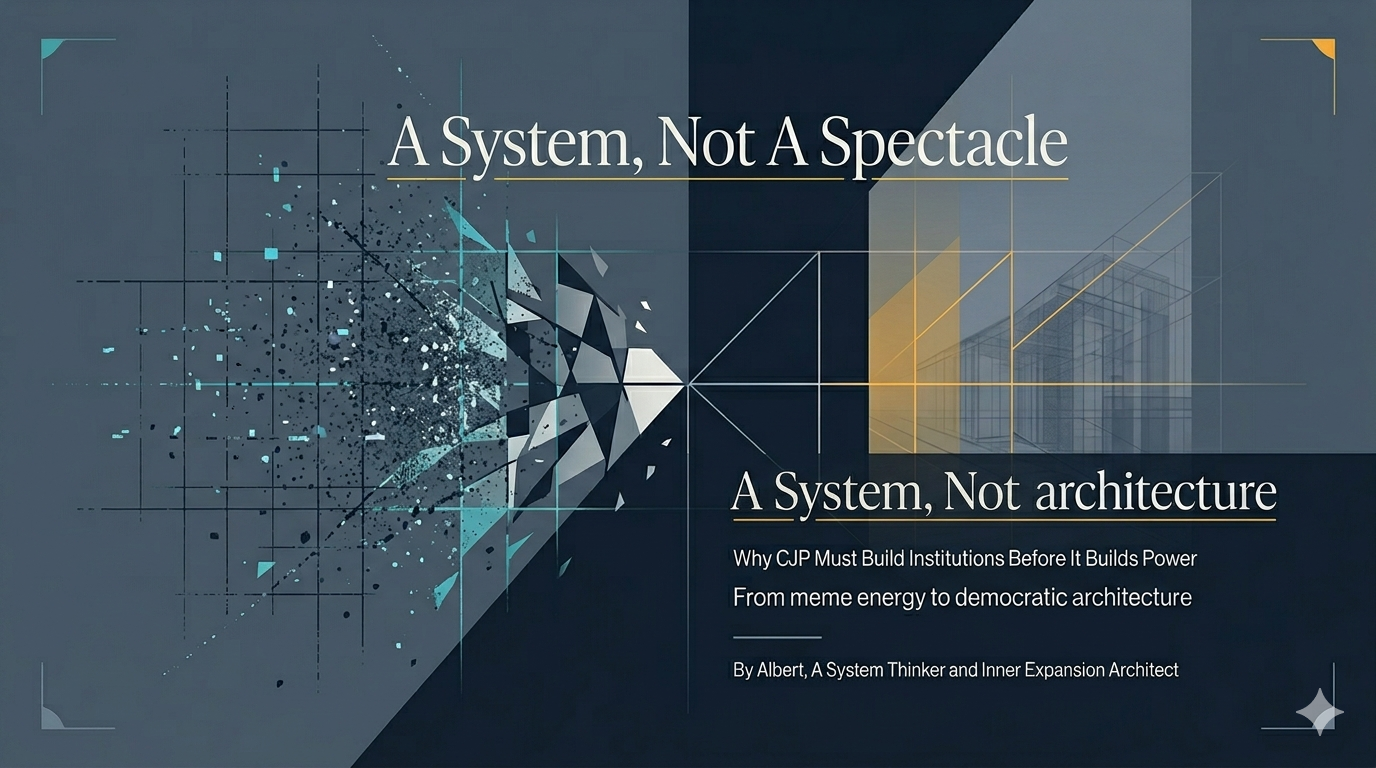
CJP, Proportional Representation, And India’s Future
This blog connects the CJP moment to wider reforms such as proportional representation, anti-defection change, election funding reform, and stronger public institutions.
-
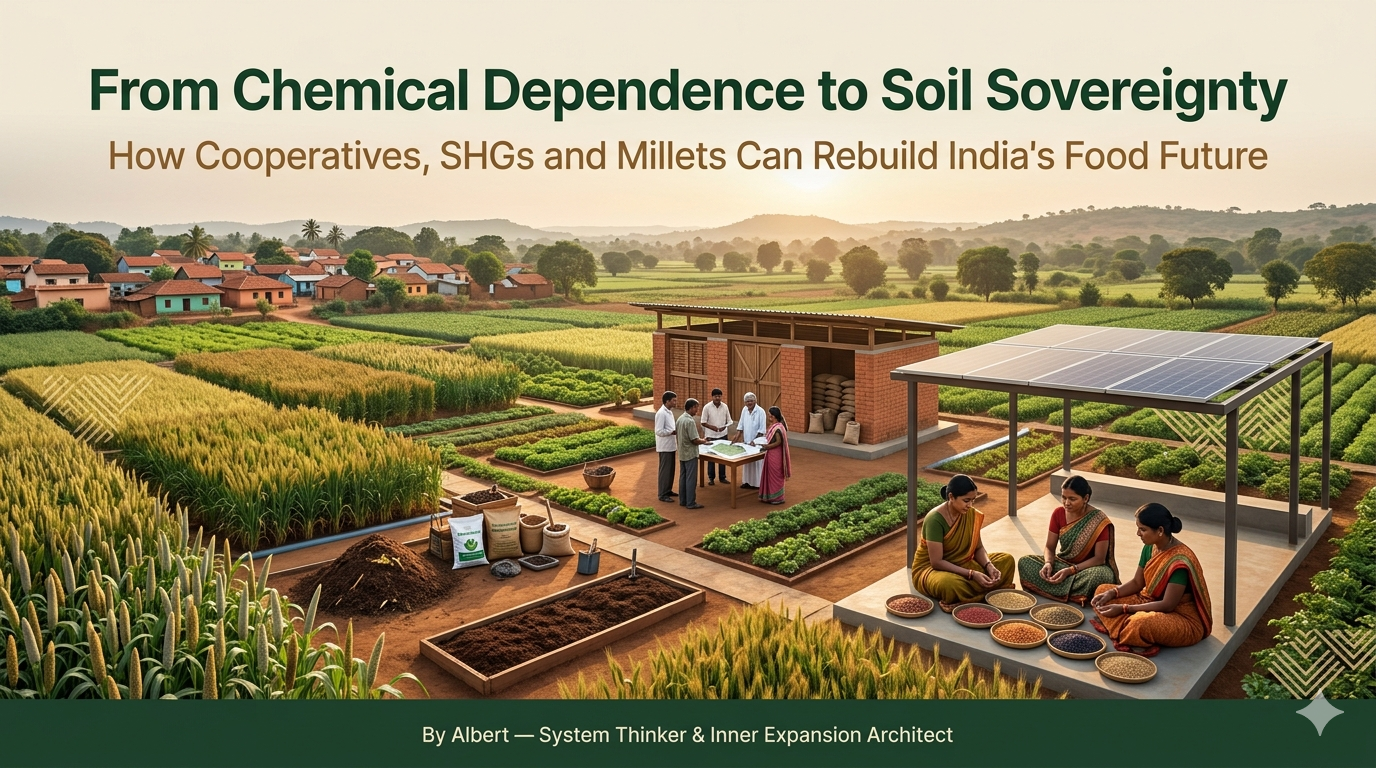
Regenerative Agriculture for Food Security in India
Ideal for a thought-leadership blog on agroecology, regenerative agriculture, and the institutional design of sustainable farming.
-
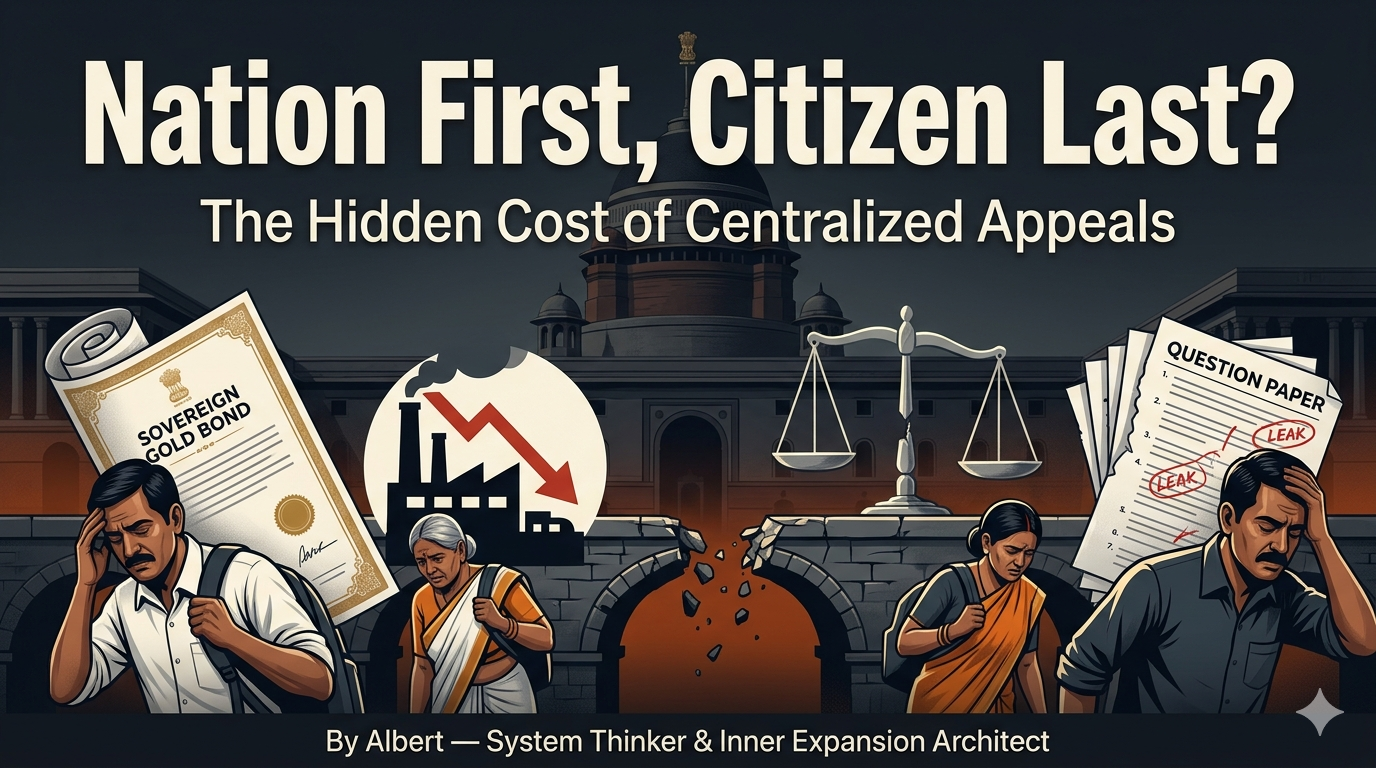
Nation First or Citizen Last? The Hidden Cost of Appeals
: India’s forex crisis is not a citizen problem. It is a governance confession. This systems breakdown exposes the burden shift hiding in plain sight. Meta Description: The appeal for citizens to stop buying gold to save the rupee sounds patriotic. But currency stability is a state function, not a civic duty. This deep-dive unpacks India’s manufacturing failure against Vietnam, the Sovereign Gold Bond tax betrayal of Budget 2026, and why rising gold demand is actually a trust deficit signal, not a cultural habit.
-
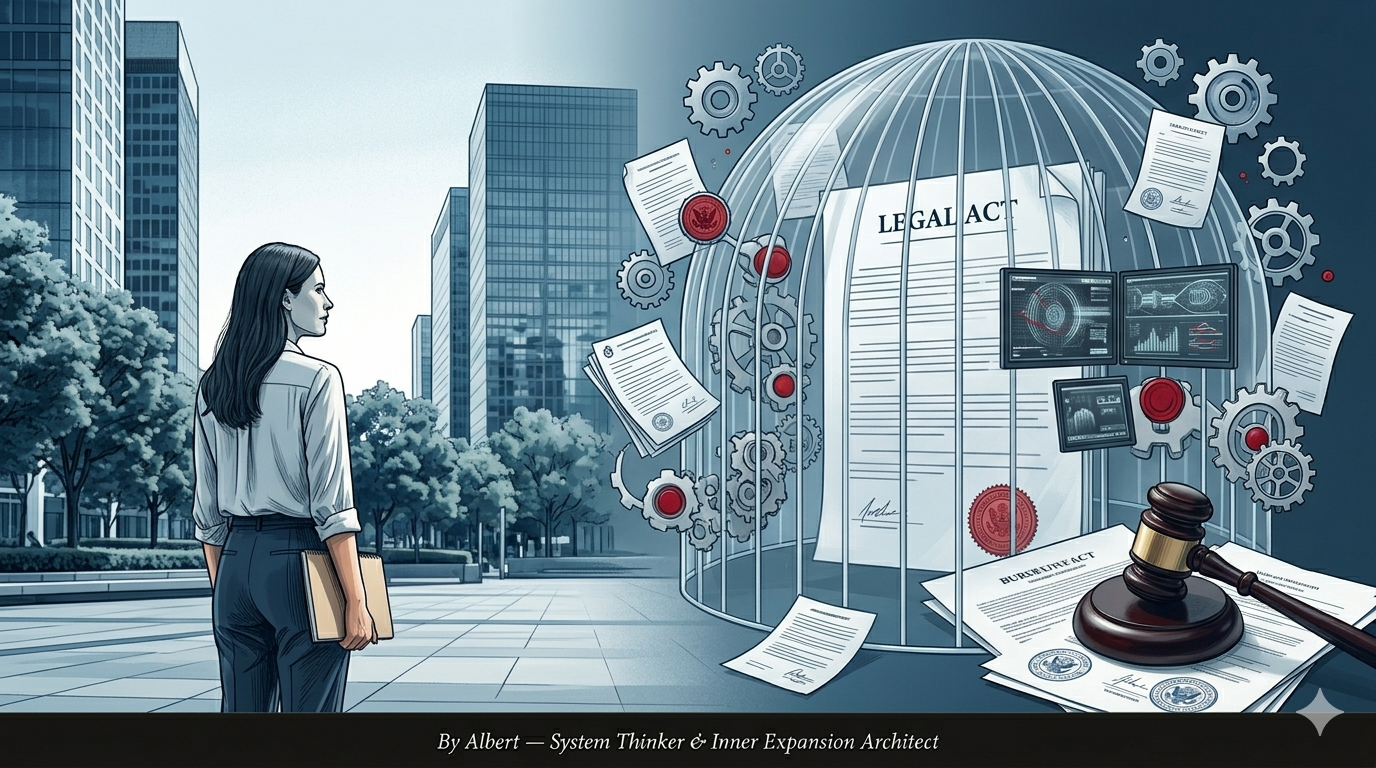
Lawfare in India: Power, Control, and Hidden Abuse
A deep dive into how legal frameworks, agencies, and political incentives can work together to suppress citizens and civic space.
-
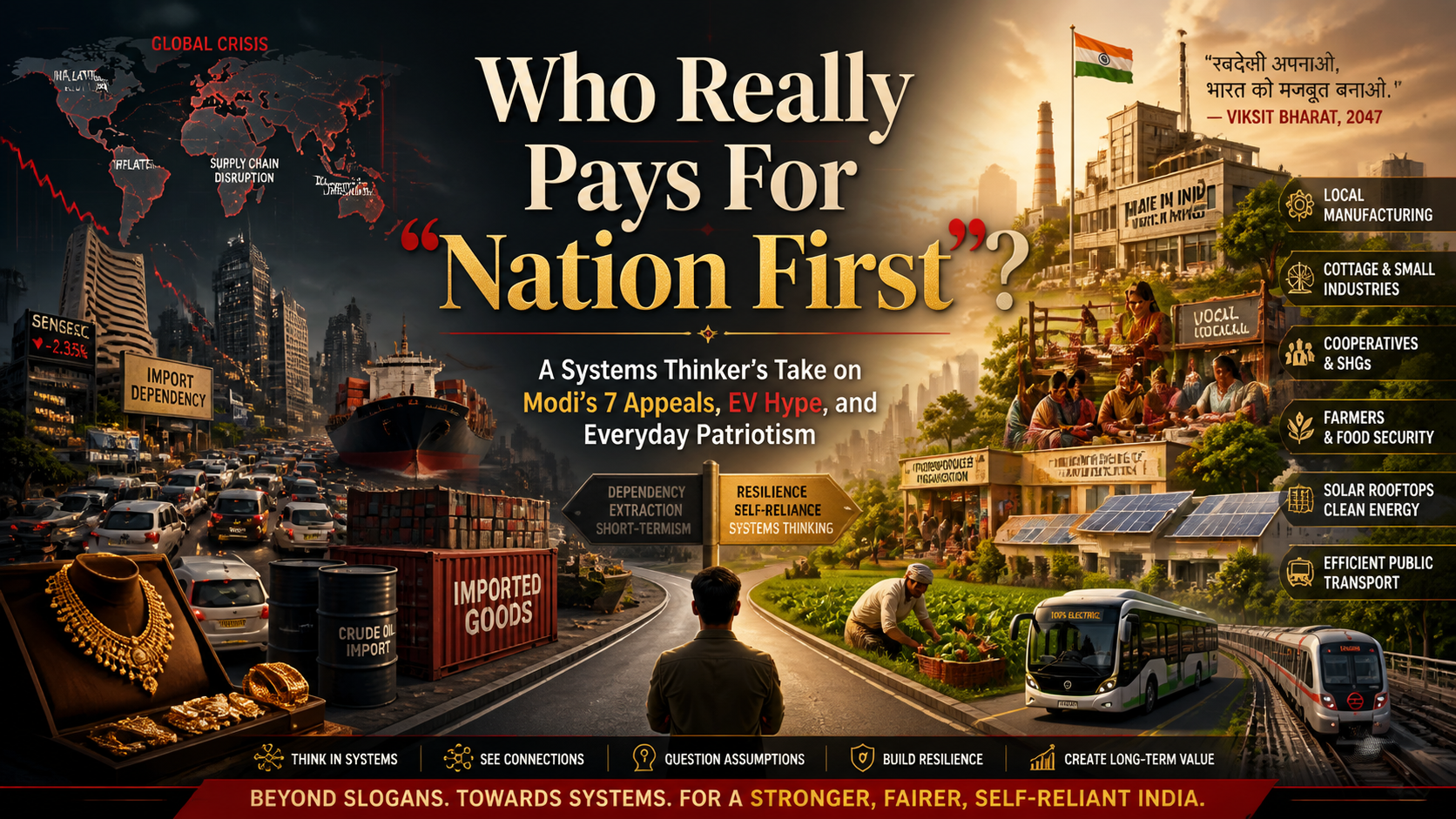
Who CARRIES the Nation First Burden? Crisis Exposed
Modi’s 7 appeals hit households hardest—but who designed the vulnerability? A dramatic systems breakdown of crisis, power, and resilience.
-
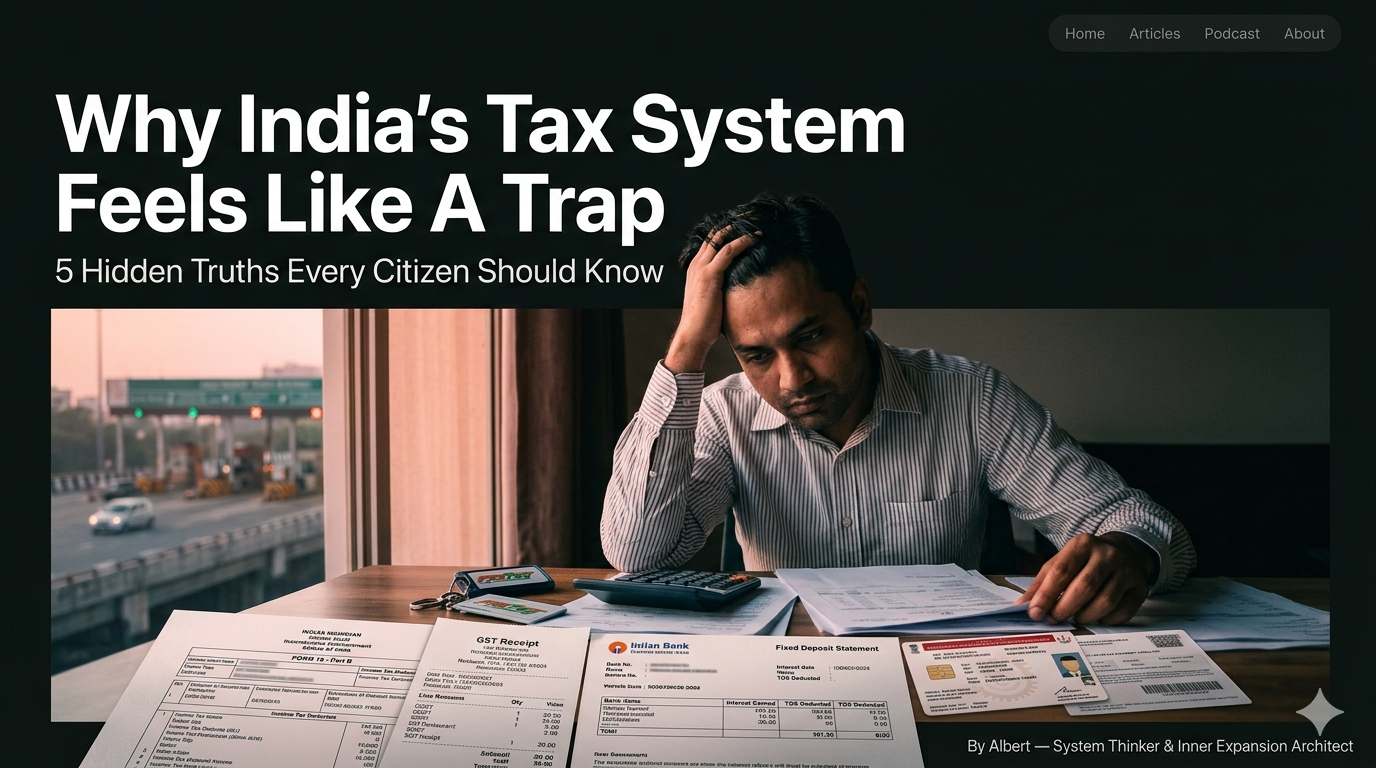
Why India’s Tax System Feels Unfair to the Middle Class
This article explains why the Indian middle class often feels squeezed by direct tax, indirect tax, and repeated levies on savings and travel. It combines real-world examples, deep insights, and actionable solutions for better civic awareness. Optimized for searches related to unfair taxation in India, middle class tax burden, and tax reform.
-
From Survival Systems to Flourishing Systems: 5 Deep Shifts for Participatory Governance in India
Break free from survival systems. 5 deep insights on participatory governance, federal reform, and citizen-centered systems thinking for India’s future.
-

The Secret Wealth Game: Why You’re Poor and They’re Rich
What if everything you believed about wealth was a carefully constructed lie? While billions of people grind away believing hard work creates riches, the ultra-wealthy are playing a completely different game — one built on monopoly power, control of money creation, and permanent legal privileges embedded in law. This isn’t conspiracy theory. This is documented history. From Jakob Fugger controlling 80% of Europe’s copper supply in the 15th century, to modern tech giants eliminating competition through regulatory capture, the playbook has never changed. In 2024 alone, billionaire wealth grew by $2 trillion — at $5.7 billion per day. Sixty percent of that wealth came from inheritance, monopoly power, or crony connections — not merit, not innovation, not hard work. This article reveals the three pillars of elite wealth that business school will never teach you, five profound insights most people never realize, and a practical step-by-step guide to navigating a system that was rigged long before you arrived.
-
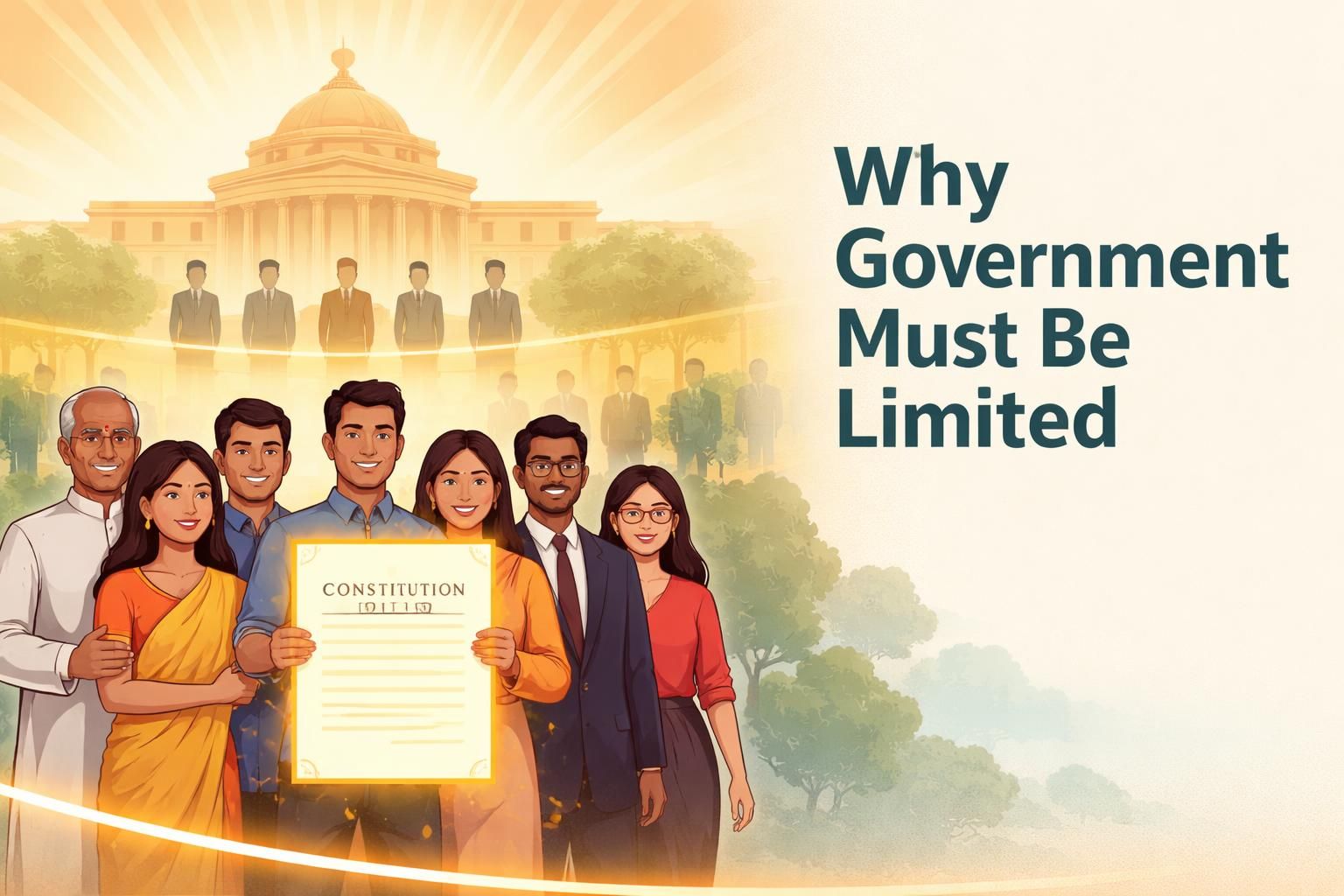
Why It’s Crucial to Restrict Government Power
When does a democracy stop being truly democratic? This blog explains why government must be limited by the Constitution, not made all‑powerful. In clear, conversational language, it unpacks constitutionalism, separation of powers, judicial review, federalism, and the basic structure doctrine, showing how they keep the state a servant of the people instead of a master. You’ll also discover five overlooked insights about power, how even elected governments can erode freedom, and practical steps citizens can take to defend rule of law and real democracy in everyday life.
-
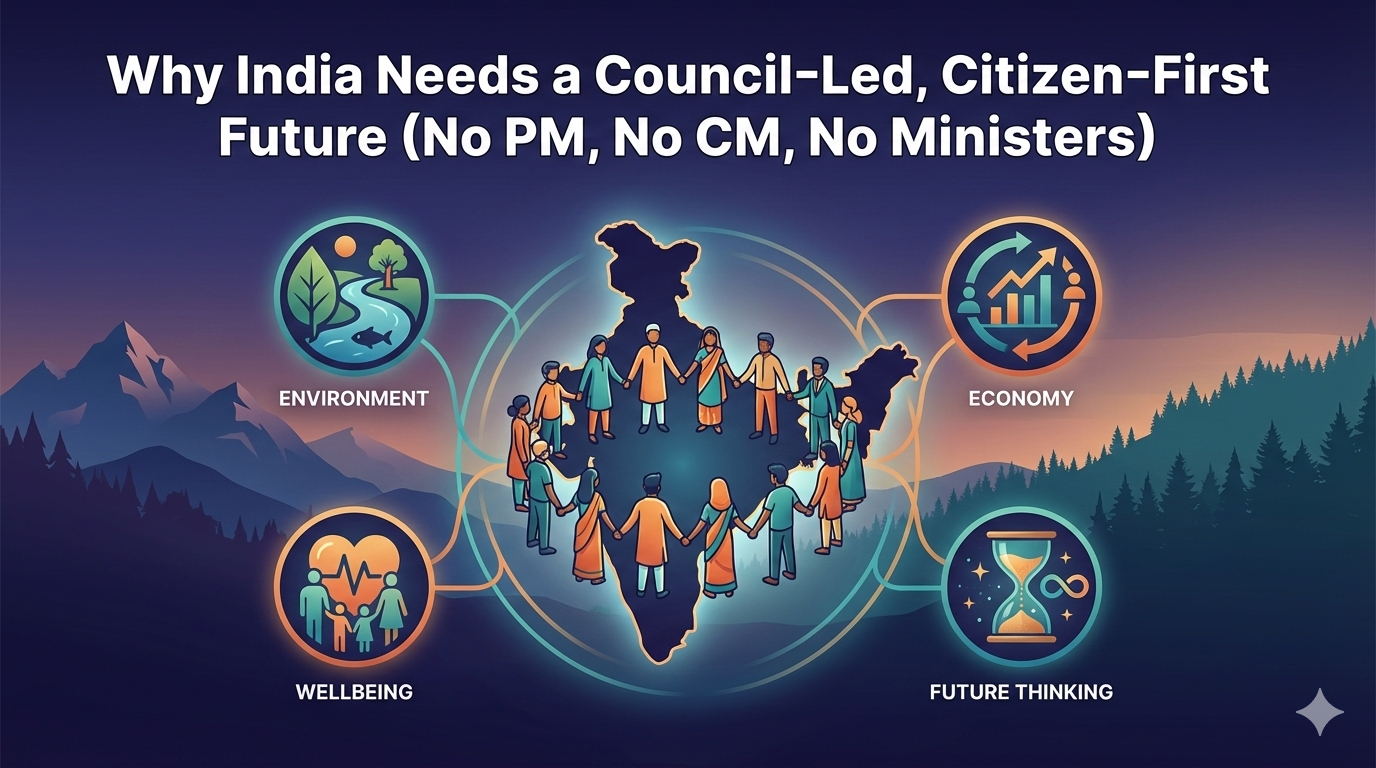
Reimagining Leadership: Citizen Councils Over Politicians in India
What if India ditched the Prime Minister, Chief Ministers, and ministers entirely? A **council-led, citizen-first model** inspired by **Switzerland’s Federal Council** (no PM, rotating leadership) and **Finland’s wellbeing economy** (future-proof budgeting) could end personality politics forever. **India governance reform** just got revolutionary: direct democracy + **wellbeing over GDP** + **no opposition drama**. Full step-by-step roadmap inside. #IndiaReform #DirectDemocracy #WellbeingEconomy